HIPAA-Compliant Faxing: How Healthcare Providers Can Secure PHI in 2025
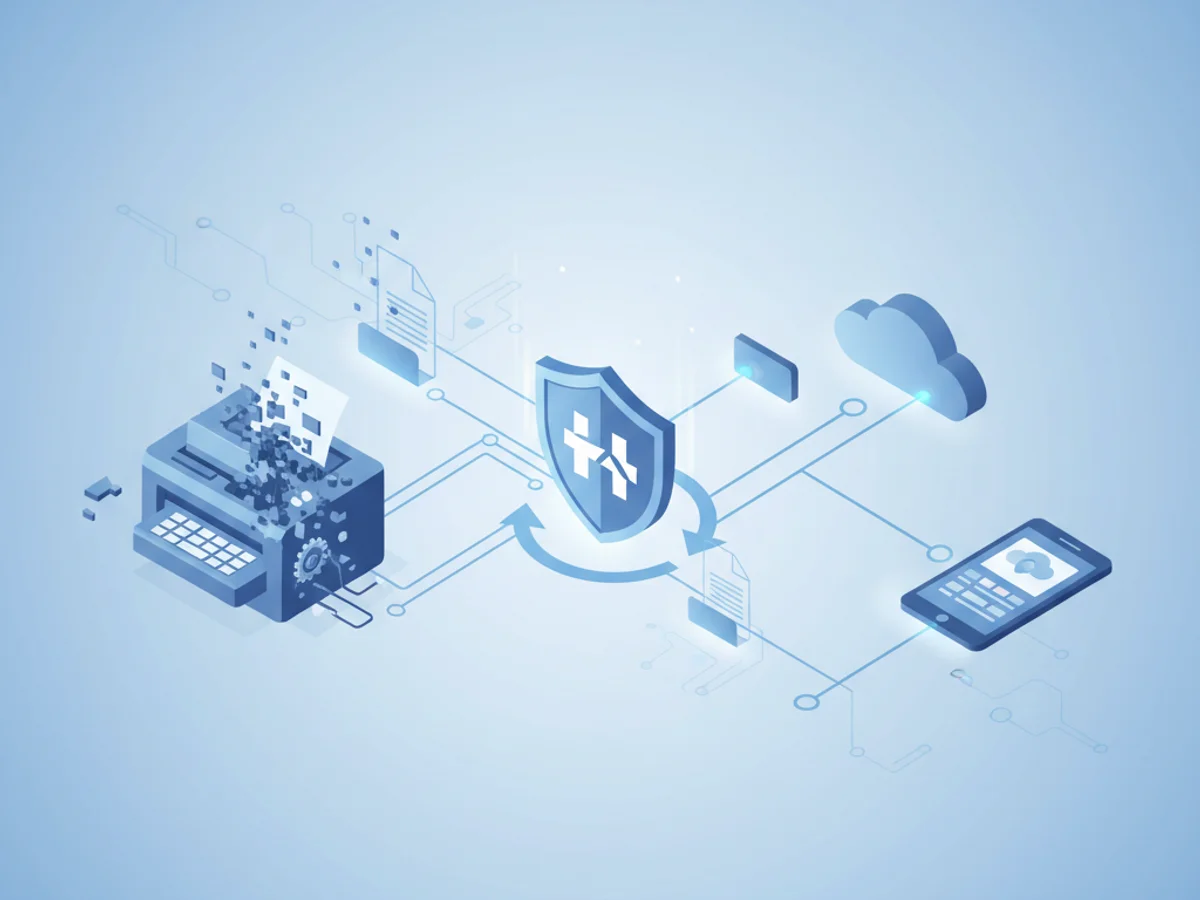
Faxing remains a workhorse in healthcare. It’s universally accepted, legally recognized, and often the fastest way to exchange records with clinics, pharmacies, and payers that use different systems. But when protected health information (PHI) moves through a fax line, HIPAA compliance becomes non-negotiable.
This guide explains what HIPAA requires for faxing, why traditional machines pose hidden risks, and how modern online faxing helps healthcare teams meet compliance while improving efficiency.
Why faxing still matters—and what HIPAA requires
Faxing persists because it bridges diverse workflows in healthcare, from prior authorizations to referrals and discharge summaries. Yet HIPAA’s Privacy Rule and Security Rule apply just as much to faxed PHI as to email or EHR data.
Key HIPAA requirements that affect faxing include:
- Minimum necessary: Share only the PHI needed for the intended purpose.
- Access controls: Limit who can send, receive, and view faxed PHI.
- Transmission security: Protect PHI in transit to reduce interception risks.
- Integrity and confidentiality: Ensure PHI isn’t altered and is kept private.
- Audit controls: Maintain logs showing who accessed PHI, when, and how.
- Policies and training: Document procedures and educate staff on secure fax practices.
- Business Associate Agreements (BAAs): Ensure any fax vendor that handles PHI signs a BAA and meets HIPAA obligations.
When faxing PHI, healthcare providers must treat it as ePHI if handled digitally (scan-to-fax, cloud faxing, or email-to-fax). That triggers the technical safeguards in the Security Rule, including encryption, authentication, and audit logging.
The hidden risks of traditional fax machines
Analog fax machines are familiar—but they can be compliance liabilities when PHI is involved.
Common risks include:
- Misdials and misdirected faxes: A simple digit error can send PHI to the wrong recipient.
- Unattended trays: Received pages sit in the open where anyone can view or take them.
- No access controls: Anyone near the device can send or read sensitive documents.
- Lack of audit trails: It’s hard to prove who sent what, to whom, and when.
- Paper sprawl: Copies can be lost, misfiled, or discarded without secure shredding.
- Transmission security: Analog lines don’t provide modern encryption.
- Downtime and maintenance: Device failures and busy signals delay care coordination.
- Limited retention and disaster recovery: Paper backups are fragile and not easily searchable.
Cover sheets and “confidential” stamps help, but they don’t solve the core issues: uncontrolled access, weak logging, and human error during dialing and handling.
How HIPAA-compliant online fax streamlines workflows
Online faxing modernizes a legacy workflow with digital safeguards that align with HIPAA. Instead of paper on a tray, faxes move through encrypted channels, authenticated accounts, and controlled access.
Benefits for healthcare teams include:
- Encryption in transit and at rest: Industry-standard encryption helps protect PHI as it travels and when stored.
- Strong identity controls: Role-based permissions, two-factor authentication, and secure login reduce unauthorized access.
- Detailed audit trails: Automatic logging of sender, recipient, timestamps, and delivery status supports HIPAA audit requirements.
- Recipient verification: Contact whitelists and directory management help prevent misdirected faxes.
- Secure eFax-to-email workflows: Receive faxes in secure inboxes with access controls, rather than on paper.
- Automated routing: Direct inbound faxes to the right team or EHR queue to reduce handling risk.
- Retention policies: Configure storage duration and legal hold, with secure deletion when appropriate.
- Mobile and multi-location support: Staff can send or receive securely from anywhere, without exposing PHI on shared devices.
- Continuity and resilience: Cloud delivery reduces busy signals and paper jams; backups and redundancy support care continuity.
- Integration-friendly: APIs and EHR-friendly workflows help embed faxing into existing processes.
Practical best practices to keep faxing HIPAA-ready:
- Use a HIPAA-compliant fax vendor and sign a BAA. Confirm encryption, access controls, and audit logging are in place.
- Limit access with role-based permissions and least-privilege policies. Review account access regularly.
- Verify recipients before sending. Use confirmed numbers, contact whitelists, and secure directories.
- Apply the minimum necessary standard. Redact or omit nonessential data.
- Use cover pages that don’t include PHI. Clearly mark documents as confidential and include sender contact details.
- Train staff on secure handling. Emphasize misdial risk, verification steps, and secure disposal.
- Set retention and deletion schedules aligned with policy. Use secure storage and documented destruction.
- Monitor logs and alerts. Investigate delivery failures and unusual access patterns promptly.
- Establish incident response procedures. Know how you’ll handle misdirected faxes and breach notifications.
- Regularly review vendor compliance documentation. Confirm ongoing adherence to HIPAA and security best practices.
Where BestFax fits in
Modern services like BestFax are designed to meet healthcare’s compliance and workflow needs without slowing teams down. BestFax provides:
- HIPAA-ready features with BAAs available for covered entities and business associates
- End-to-end encryption for transmissions and secure cloud storage
- Role-based access, two-factor authentication, and account-level permissions
- Comprehensive audit logs for send, receive, and access events
- Recipient management with whitelisting to reduce misdirected faxes
- Flexible retention policies and secure deletion workflows
- Integration options and APIs to connect faxing with EHRs and care coordination tools
By moving to a secure online fax platform, providers can minimize paper risks, add accountability through audit trails, and free staff from the daily friction of busy lines and device maintenance.
A quick checklist when evaluating HIPAA-compliant fax providers:
- Will the vendor sign a BAA and provide security documentation upon request?
- Is encryption used in transit and at rest, with strong key management?
- Are access controls granular (roles, groups, least-privilege) and supported by MFA?
- Are audit logs comprehensive, immutable, and exportable for compliance reviews?
- Can inbound faxes be routed securely to the right team or system with minimal handling?
- Are retention settings configurable and supported by secure deletion?
- Does the platform provide incident response support and clear breach procedures?
- Is there reliable uptime, redundancy, and support that understands healthcare workflows?
Protect PHI and streamline your day
HIPAA-compliant faxing isn’t just about checking boxes—it’s about designing workflows that reduce risk while helping clinicians, administrators, and billing teams move faster. Online fax platforms make the secure path the easy path.
If you’re ready to update your fax process without disrupting care, try BestFax. Our team can provide a BAA, help configure secure workflows, and support your rollout. Start your free trial or talk to a compliance specialist today.
Related Posts
How Workers’ Comp Clinics Fax DWC PR-2 and RFA Forms Without Rejections
Stop PR-2 and RFA fax rejections with a clinic-ready workflow: identifiers on every page, clean ordering, verified destinations, and saved delivery receipts.
How DME Suppliers Fax CMNs to Medicare Without Signature Rejections
Reduce CMN signature denials with a compliant, legible, and repeatable fax workflow. Practical steps, real scenarios, and a simple browser-based way to send and confirm.
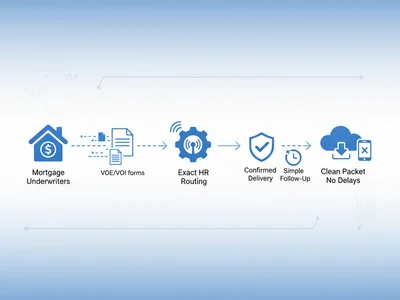
How Mortgage Underwriters Fax VOE/VOI Forms to Employers Without Delays
Get VOE/VOI verifications back in under 48 hours with clean packets, exact HR routing, confirmed delivery, and a simple follow-up cadence—no app required.