Smart Retention for Faxed Records: A Practical Guide for Modern Teams
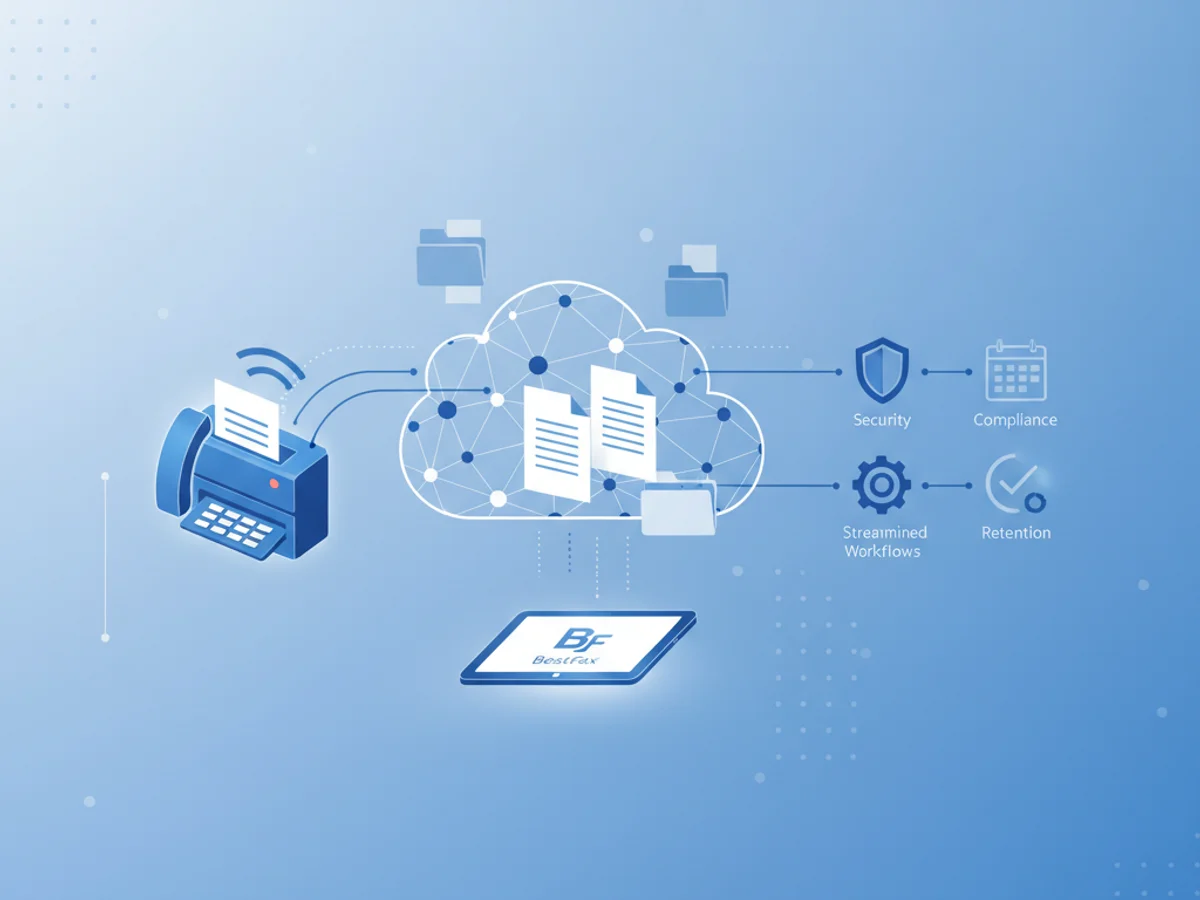
Fax remains a trusted way to exchange sensitive information—from patient records and loan documents to contracts and HR forms. Yet many organizations still struggle with how long to keep faxed documents, where to store them, and how to dispose of them safely. A clear, enforced document retention policy brings order to the chaos, reduces risk, and supports compliance across departments.
Below, we unpack what a good retention policy looks like for faxed documents, how regulations shape the timeline, and how modern online fax services can make retention simpler and more secure.
Why retention policies matter for faxed documents
Without a policy, faxed records tend to pile up in shared inboxes, filing cabinets, and disparate cloud folders. That creates risk and inefficiency. A documented, consistently applied retention framework helps you:
- Prove compliance: Regulators expect organizations to keep certain records for specific periods and to dispose of data securely when it’s no longer needed.
- Reduce legal exposure: Clear timelines and defensible disposal reduce what’s discoverable in litigation and minimize privacy violations.
- Strengthen security: Policies pair retention with access controls, encryption, audit trails, and secure disposal.
- Improve productivity: Staff know where to store faxed documents, how to classify them, and when to delete them—no more guesswork.
- Cut storage costs: Keep what you must, archive what you should, remove what you can.
Importantly, a “faxed document” is not the paper or image itself—it’s the information it contains. Treat the content as the record. A scan or digital fax image, plus its metadata (sender, recipient, timestamp, transmission log), may all be part of the record you need to retain.
How long should you keep faxed documents?
Retention periods vary by industry, jurisdiction, and document type. Always confirm with legal counsel or your compliance officer, but these commonly cited ranges can help you shape a baseline:
- Healthcare (healthcare privacy law, state laws): Patient medical records are often 5–10 years or longer (varies by state). Healthcare privacy law requires organizations to retain policies, procedures, and related documentation for 6 years from the date of creation or last effective date.
- Financial services (SEC/FINRA): Broker-dealers must retain certain records (e.g., customer account records, communications) for 6 years under SEC Rule 17a-4; FINRA Rule 4511 aligns retention with applicable rules and records may range from 3–6 years or more.
- Tax and accounting: Many organizations retain tax-related records for 7 years; some keep core financial statements longer.
- HR and employment: Employee personnel files and payroll records often range 3–7 years after termination, depending on local laws.
- Contracts and legal agreements: Typically retain through the term plus a defined period (e.g., 6 years) to cover limitations periods.
- General business communications: Keep only as long as necessary for business or compliance needs; apply data minimization principles (e.g., GDPR).
- Transmission logs: Retain fax logs and audit trails long enough to support dispute resolution, eDiscovery, and compliance audits (often 1–3 years, or aligned with the underlying record).
A practical approach is to group faxed documents into categories (e.g., patient communications, financial correspondence, contracts, HR forms) and assign retention periods that reflect the strictest applicable rule. When in doubt, document the rationale and review it annually.
Note: The above is general information and not legal advice. Regulations change and vary widely—consult qualified counsel for definitive guidance.
Build a practical retention policy (and make it work with online fax)
A strong policy is both well-defined and easy to follow. Draft it collaboratively, then embed it into the tools your team uses every day.
- Define scope and roles
- Scope: Specify that the policy covers all faxed documents—paper, scanned images, and online fax transmissions—and related metadata (logs, headers, timestamps).
- Roles: Assign ownership for policy oversight, system administration, records management, and legal holds. Clarify who can authorize exceptions.
- Classify faxed records
- Create categories aligned to compliance needs (e.g., Protected Health Information, financial communications, contracts, HR).
- Map categories to retention periods, security requirements, and disposal methods.
- Establish retention schedules
- Document a schedule for each category: minimum retention, storage location, and disposal date calculation (e.g., “X years after contract end” or “Y years after employee separation”).
- Include transmission logs and audit trails in your schedule. Logs often prove delivery and support investigations.
- Set storage and access controls
- Centralize storage: Avoid scattered inboxes. Use a controlled repository or an online fax platform that provides secure, searchable archives.
- Access: Enforce least privilege with role-based permissions and multifactor authentication.
- Security: Require encryption in transit and at rest, plus regular backups and integrity checks.
- Plan for legal holds
- Define a process to suspend scheduled deletion when litigation, investigations, or audits require preservation.
- Track holds and communicate changes to affected teams so records aren’t deleted inadvertently.
- Dispose securely and document it
- Use defensible deletion: When a record meets its retention period and no hold applies, remove it using secure deletion methods.
- Log disposal: Record what was deleted, when, by whom, and under which policy rule.
- Train, audit, and improve
- Educate staff who handle faxed records; use short guides and periodic refreshers.
- Audit compliance: Sample records, verify retention and access controls, and remediate gaps.
- Review annually: Update schedules for new laws, business changes, and audit findings.
Make retention effortless with online fax
Paper workflows make retention hard: someone needs to file a copy, track dates, and remember to shred. Modern online fax services reduce those failure points.
Here’s how a best-in-class platform like BestFax can help:
- Automated retention rules: Apply policies by category so faxed documents are archived for the right duration and removed on schedule.
- Centralized, searchable repository: Store inbound and outbound faxes with metadata, making audits, eDiscovery, and customer support faster.
- Security by design: Encryption in transit and at rest, role-based access, IP restrictions, and comprehensive audit trails.
- Legal holds and exceptions: Pause deletion for specific records when a hold is active, then resume once it’s lifted.
- Compliance-friendly logging: Preserve transmission logs, timestamps, and delivery confirmations for the retention period you define.
- Integrations: Connect to document management and cloud storage tools to keep records where your teams work, without losing control.
By moving fax workflows into a secure, policy-aware platform, you reduce manual handling, keep records consistent, and gain the evidence regulators look for during reviews.
Sample retention checklist for faxed documents
Use this quick checklist to turn policy into practice:
- Identify your top 5 faxed document categories and map corresponding laws.
- Assign retention periods and disposal methods for each category.
- Configure online fax settings: retention rules, access roles, encryption, and legal hold workflows.
- Define storage locations and standard naming conventions.
- Train staff on classification and retention basics.
- Schedule quarterly audits and an annual policy review.
A little upfront work pays off for years—fewer surprises in audits, faster responses to records requests, and less time spent chasing copies.
Ready to modernize your retention process? BestFax makes it easy to centralize faxed documents, automate retention, and protect sensitive data without slowing down your team. Start a free trial or talk to our experts to see how BestFax can streamline your compliance and simplify day-to-day workflows.
Related Posts

How Funeral Homes Fax Death Certificates to Doctors Without Burial Delays
Practical tips for funeral homes faxing death certificate paperwork to doctors quickly, clearly, and with fewer burial or cremation delays.

How Mobile Phlebotomists Fax Lab Requisitions Without Specimen Delays
Practical field tips for mobile phlebotomists to fax lab requisitions clearly, confirm delivery, and avoid paperwork-related specimen delays.
How Title Companies Fax Payoff Statements Without Closing Delays
Payoff statements can stall closings when faxing is slow or disorganized. Learn practical steps title companies can use to send, confirm, and track payoff faxes.