How Crisis Counselors Fax 988 Follow-Up Referrals Without Care Delays
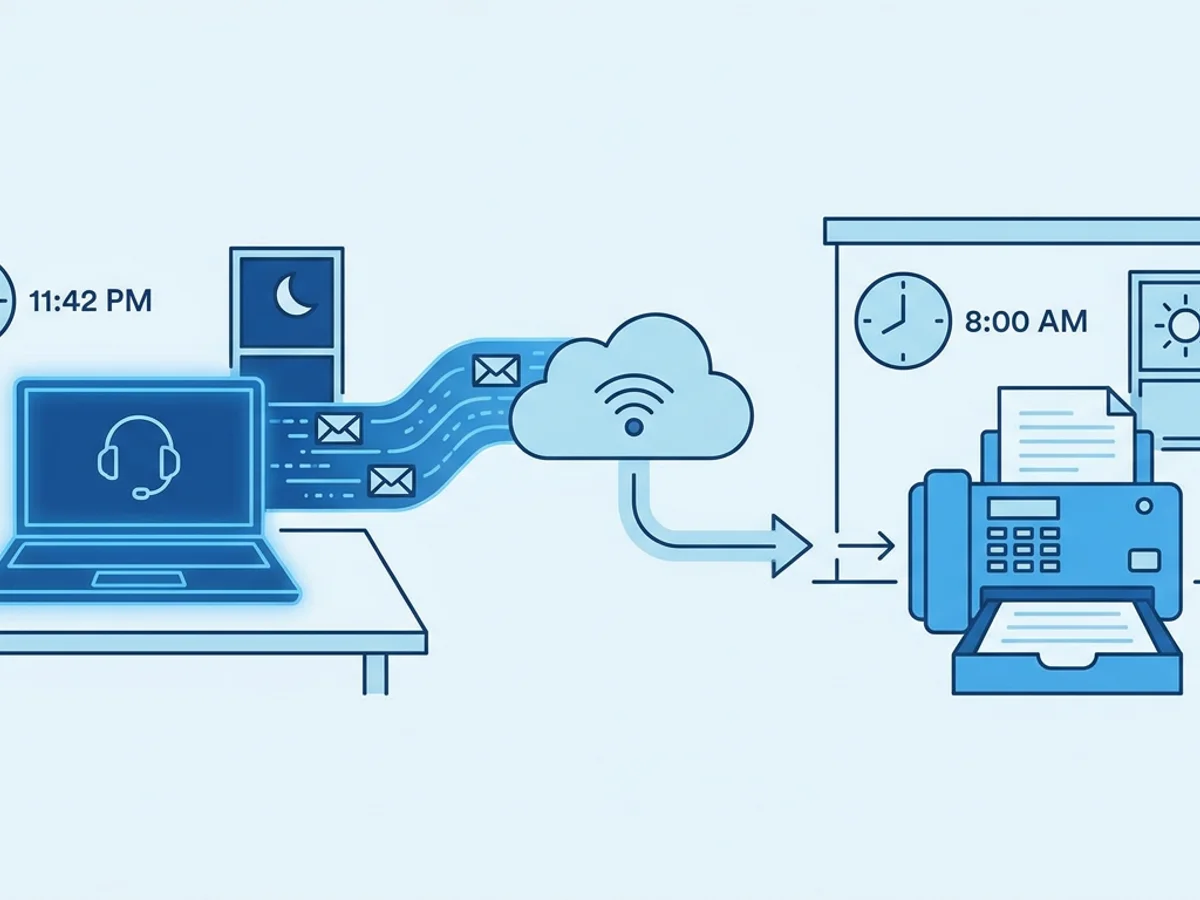
A counselor finishes a 988 call at 11:42 p.m. The caller is calmer, a safety plan is in place, and the next step is clear: a follow-up referral needs to reach a community behavioral health clinic before morning intake begins. The clinic still accepts referrals by fax. The counselor is working remotely, the office fax machine is across town, and waiting until the next shift could slow down care.
That is the moment where faxing becomes more than an administrative task. It becomes part of the handoff.
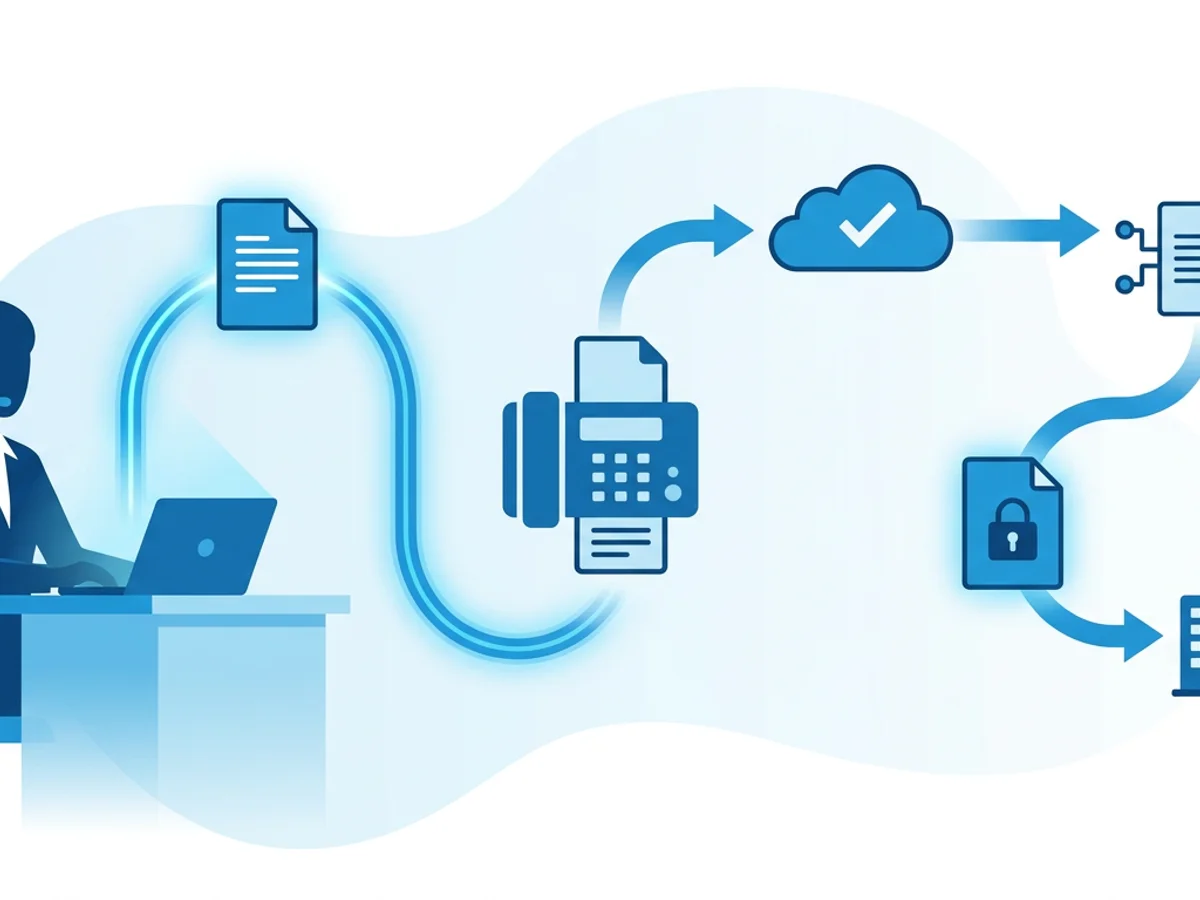
Many crisis teams still rely on fax for referrals, releases, discharge summaries, safety planning documents, mobile crisis follow-up, and coordination with outpatient providers. The challenge is not simply “send a fax.” It is sending the right information, to the right recipient, with enough documentation to support continuity of care, without creating avoidable delays.
Browser-based faxing can help crisis counselors and supervisors complete these handoffs from a phone, tablet, or computer when they do not have immediate access to a physical fax machine. Used thoughtfully, it can fit into the urgent, documentation-heavy reality of 988 follow-up workflows.
Where fax fits in the 988 follow-up referral workflow
A 988 interaction often creates a narrow window for follow-up. The caller may agree to receive support, accept a referral, or authorize communication with a clinic, stabilization unit, peer support program, or mobile crisis team. The counselor’s job is to preserve momentum while the caller is still engaged and the details are fresh.
Fax commonly appears in situations like these:
- A community mental health center requires a referral form before scheduling an urgent appointment.
- A crisis stabilization unit requests call notes, screening results, or a completed intake packet.
- A primary care office wants a written behavioral health referral before coordinating medication or follow-up.
- A school, shelter, or outreach provider accepts documentation only through fax or secure portal.
- A mobile crisis team needs a written referral packet in addition to a phone warm handoff.
The care delay usually does not come from the fax itself. It comes from friction around the fax: finding a machine, printing documents, scanning signed forms, confirming the number, waiting in line at a shared device, or discovering in the morning that the transmission failed.
For crisis counselors, especially those working overnight, hybrid, or remote shifts, the practical goal is to reduce those friction points while still following organizational policies. A browser-based service such as BestFax.com lets users send and receive faxes from Safari, Chrome, Firefox, or Edge on a phone, tablet, or computer. That can be useful when a referral needs to move immediately and the counselor already has the referral file prepared as a PDF, Word document, or image.
The bigger point is not convenience for its own sake. It is keeping the referral handoff from becoming the weakest link between crisis support and ongoing care.
A practical sequence for sending referrals without slowing the handoff
When a crisis line is busy, even a small amount of structure helps. Counselors do not need a complicated process, but they do need a repeatable one that prevents missed pages, wrong numbers, and unclear responsibility.
A useful referral fax sequence often looks like this:
Confirm the receiving destination before ending the call, when possible.
If the caller is being referred to a known provider, confirm the fax number from an approved directory, internal resource list, or the receiving agency’s official materials. Avoid relying on a number mentioned verbally unless your policy allows it and you can verify it.Clarify what documents actually need to be sent.
A referral may not require the entire call record. It may only require a referral form, screening summary, consent documentation, safety plan, or contact instructions. Sending unnecessary information can slow review and create avoidable risk. When in doubt, follow your center’s procedure or supervisor guidance.Create a clean, complete file.
Most fax problems start before the fax is sent. Make sure the referral is legible, pages are in the correct order, required fields are complete, and signatures or authorizations are included if required. Browser-based faxing works well when documents are already saved as PDF, Word, or image files.Use a professional cover page.
The cover page should tell the receiving team what they are looking at and what action is needed. Professional fax cover pages are included with the service, which helps avoid handwritten or improvised covers when time is short.Send, then document the result.
Do not assume a referral was received just because it was submitted. Fax confirmation or delivery receipts matter. They give the counselor, supervisor, or next shift a record that the referral was transmitted, and they help identify failed or incomplete attempts quickly.
Here is a realistic example:
A counselor completes a call with a young adult who agrees to next-day outpatient follow-up. The local clinic requires a faxed referral before assigning an intake slot. The counselor saves the completed referral and consent form as a PDF, adds a cover page identifying it as an urgent follow-up referral, sends it through a browser-based fax tool, and records the delivery receipt in the case note according to the center’s policy. If the fax fails, the counselor knows immediately and can retry, call the receiving site, or escalate to a supervisor rather than leaving the problem for the morning.
That last step is where delays are often prevented. Confirmation closes the loop.
What to include on a 988 follow-up referral fax cover page
A cover page is easy to overlook during a high-pressure shift, but it can determine how quickly the receiving organization routes the referral. A vague cover page may sit in a general fax queue. A clear one can help staff recognize urgency and direct it to intake, crisis follow-up, or a specific clinician.
Keep the cover page concise. It should support routing, not repeat the whole case.
Depending on your organization’s policies, a referral cover page may include:
- Date and time sent
- Recipient organization and department, such as “Access Team” or “Crisis Intake”
- Recipient fax number
- Sender name, role, organization, and callback number
- Number of pages, including the cover page
- A clear subject line, such as “988 follow-up referral” or “urgent outpatient intake referral”
- Requested action, such as “Please review for next available crisis follow-up appointment”
- Any time-sensitive context the receiving provider needs for routing
For example:
Subject: 988 follow-up referral for intake review
Requested action: Please review for next available behavioral health intake and contact the caller using the preferred number listed on the referral form.
Pages: 6 including cover page
Callback: Crisis follow-up desk, [phone number]
Avoid writing a long narrative on the cover page. The detailed clinical or referral information belongs in the attached document, formatted according to your center’s standards. The cover page should make it obvious what the fax is and what needs to happen next.
This is also a good place to be honest about timing. If the receiving agency will not open until 8 a.m., the cover page should still be clear enough for the morning intake worker to act quickly. If the referral needs same-night review, include the correct routing instructions or call the receiving provider in addition to faxing, if your protocol requires it.
Avoiding common delays: wrong numbers, missing pages, and failed receipts
Crisis counselors often work in environments where speed is necessary but mistakes are costly. A fax workflow should reduce preventable errors, not introduce new ones.
The most common fax-related delays are predictable.
Wrong or outdated fax number.
Provider directories change, departments merge, and after-hours numbers are not always the same as business-hour numbers. Use approved internal directories when available. If you maintain a referral list, make number verification part of routine quality improvement, not something counselors have to solve during a crisis call.
Unclear receiving department.
A hospital main fax line may not be the same as behavioral health intake. A community agency may have separate numbers for records, referrals, medication services, and crisis response. A clear cover page helps, but the correct destination matters more.
Missing authorization or incomplete forms.
If a provider cannot act on the referral because required fields are blank, the fax technically arrived but the handoff still failed. Build a quick checklist into your referral process: consent included if required, caller contact information, risk level or urgency indicator, requested service, counselor callback number, and any required screening form.
Illegible scans or photos.
If a document is captured as an image, make sure it is readable before sending. Poor lighting, cropped pages, or shadows can make a referral unusable. PDF files are often cleaner when available.
No proof of delivery.
A delivery receipt does not replace clinical follow-up, but it does help confirm that the fax transmission completed. BestFax.com provides fax confirmation and delivery receipts, which can support handoff documentation and shift-to-shift accountability.
Assuming fax replaces a warm handoff.
For higher-risk situations, a fax may be only one part of the referral. Your protocol may require a live call to mobile crisis, emergency services, a supervisor, or the receiving provider. Fax is useful for documentation and routing, but it should not be treated as a substitute for real-time escalation when real-time escalation is needed.
One helpful habit is to document the fax outcome in plain language:
“Referral faxed to ABC Community Behavioral Health access team at 12:08 a.m.; delivery receipt received at 12:10 a.m.; next shift to confirm intake review after 8:00 a.m.”
That kind of note tells the next counselor exactly where things stand.
Using browser-based faxing responsibly in crisis work
Online faxing is not automatically the right fit for every behavioral health workflow. Crisis centers have to follow their own privacy, security, contracting, records, and compliance requirements. Supervisors should decide what tools are approved, what information may be sent, where receipts should be stored, and how staff should document transmission attempts.
BestFax.com uses TLS encryption for fax transmissions. The service does not offer a business associate agreement or healthcare-specific compliance certification, so organizations should evaluate whether and how it fits their policies before using it for sensitive referral workflows. That honest review matters, especially in behavioral health settings where referral documents can contain highly sensitive information.
If your organization approves browser-based faxing for appropriate use cases, the practical benefits are straightforward:
- Counselors can send and receive faxes from a web browser on a phone, tablet, or computer.
- It works in Safari, Chrome, Firefox, and Edge; no app download required.
- Referral packets can be uploaded as PDF, Word, or image files.
- Professional cover pages help standardize outbound referrals.
- Confirmation and delivery receipts help staff verify that the fax was transmitted.
- Pricing is simple: $4.95 one-time per fax or a $10/month subscription.
Those details are useful for teams that do not fax constantly but still need the option during urgent follow-up work. A small crisis program might only need occasional faxing after hours. A counselor covering a remote shift might need to send one referral packet immediately rather than wait for access to an office machine. A supervisor might need a backup method when a physical fax line is busy or unavailable.
The key is to make the workflow explicit before the crisis moment. Decide who is allowed to send referrals, which documents are appropriate, how numbers are verified, where receipts are recorded, and when faxing must be paired with a phone call or other escalation. A tool can reduce delay only if the process around it is clear.
A simple after-hours referral scenario
Consider a rural crisis program that receives a 988 transfer involving a caller with worsening depression but no immediate emergency transport need. The caller agrees to a next-day follow-up appointment with a regional behavioral health clinic. The clinic’s intake team starts reviewing referrals at 7:30 a.m., and their stated process requires a faxed referral form.
Without browser-based faxing, the counselor may have to queue the referral for office staff in the morning, hope the fax machine is working, and rely on someone else to notice the urgency. That can add hours.
With an approved browser-based process, the counselor can complete the referral packet during the same shift, upload the file, send it to the verified intake fax number, and attach or record the delivery receipt according to internal procedure. The morning team can then focus on confirming appointment status rather than starting the referral from scratch.
This does not solve every access problem. The clinic may be full. The caller may not answer. The referral may require additional review. But it removes one avoidable administrative delay: the document is already where it needs to be.
For crisis counselors, that is often the realistic goal. Not perfection. Not instant access to every service. Just fewer preventable gaps between a caller saying “yes, I’ll accept help” and the next provider receiving what they need to act.
Bottom line
Fax is still part of many 988 follow-up referral pathways, especially when coordinating with clinics, crisis teams, hospitals, shelters, and community providers that rely on faxed intake documents. The fastest workflow is not the one that rushes. It is the one that verifies the destination, sends a complete packet, uses a clear cover page, confirms delivery, and documents the handoff.
Browser-based faxing can help counselors send time-sensitive referrals from the device they already have, without waiting for access to a physical fax machine. Used within approved organizational policies, it can reduce avoidable care delays and make follow-up handoffs easier to track.
Send your first fax at BestFax.com.
Related Posts
How Prosthetics Clinics Can Fax Detailed Written Orders Without Medicare Delays
Practical fax workflow tips for prosthetics clinics sending Detailed Written Orders while reducing avoidable Medicare documentation delays.

How ER Clinics Fax EMTALA Transfer Forms Without Acceptance Delays
Practical steps for ER teams to fax EMTALA transfer packets faster, verify delivery, and reduce avoidable acceptance delays.

How Chiropractors Can Fax PIP Treatment Notes Without Claim Rejections
Practical steps for chiropractors to prepare, fax, and document PIP treatment notes so claims are less likely to be delayed or rejected.