How Fertility Clinics Fax Lab Orders to Reference Labs Without Cycle Delays
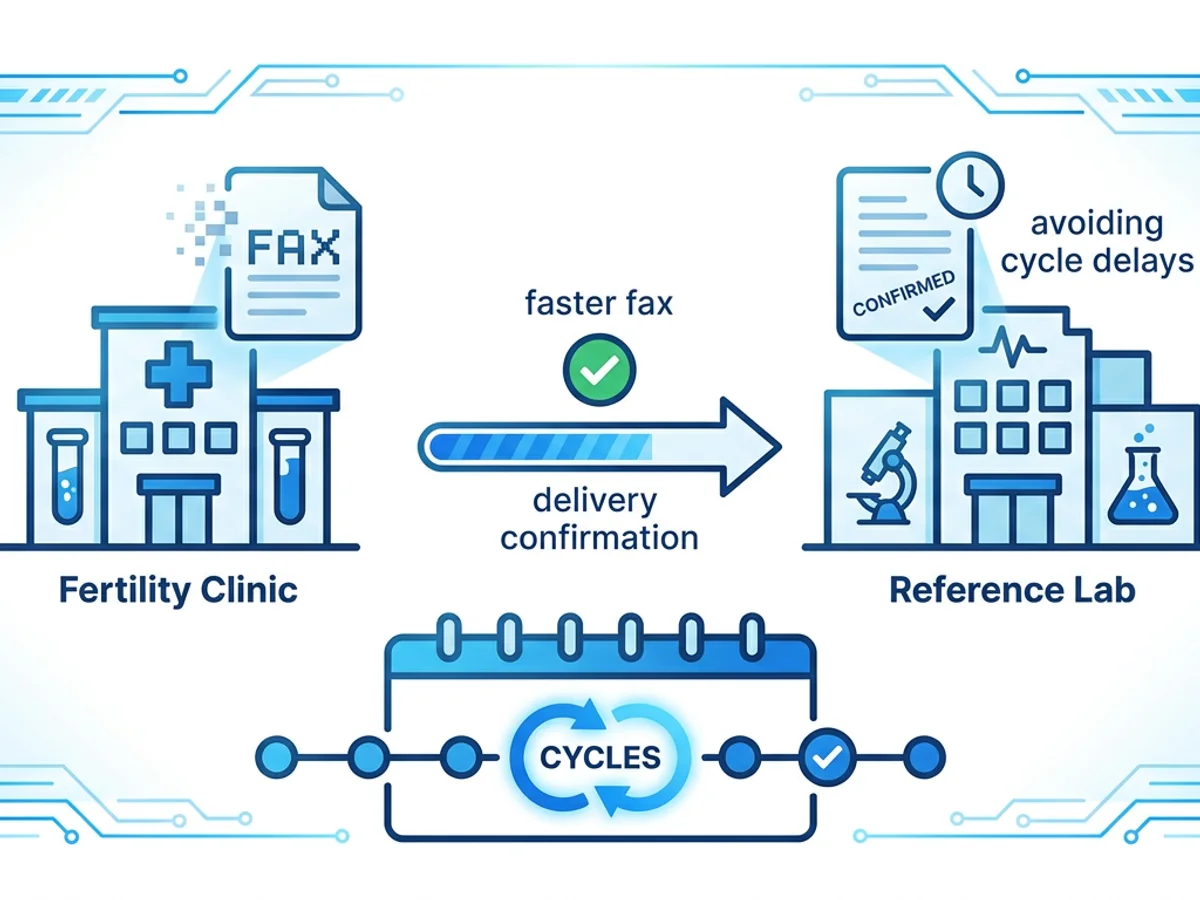
A fertility cycle can be thrown off by something as ordinary as a missing lab order.
A patient comes in on cycle day 2 for baseline bloodwork. The reproductive endocrinologist wants estradiol, progesterone, LH, FSH, AMH, infectious disease screening, or a specialty test sent to a reference lab. The patient is traveling, the nurse is coordinating ultrasound timing, and the lab needs the order before pickup. If the fax does not arrive, the sample may sit, the blood draw may need to be repeated, or a medication decision may be delayed until the next morning.
For fertility clinics, faxing lab orders is not just an administrative task. It is part of cycle coordination. Many reference labs still rely on fax because it creates a familiar document workflow: signed requisitions, insurance details, diagnosis codes, specimen instructions, and confirmation that the order was transmitted. The challenge is making that process reliable when clinic staff are moving between exam rooms, surgery schedules, monitoring appointments, and remote follow-up.
This guide covers practical ways fertility teams can fax lab orders to reference labs without slowing down stimulation cycles, IUI timing, IVF retrieval prep, or frozen embryo transfer planning.
Where fax delays actually happen in fertility workflows
Most fax problems are not caused by one dramatic failure. They happen in small handoff points: an order is waiting for a signature, a requisition is missing a patient identifier, a fax number is copied from an old contact sheet, or a staff member assumes someone else sent it.
In a fertility clinic, those gaps are especially risky because many decisions are time-sensitive. A monitoring lab result may determine whether a patient continues the same gonadotropin dose, starts an antagonist, triggers ovulation, or returns the next day. Outside lab orders also affect patients who cannot get blood drawn at the clinic because they live far away, are traveling for treatment, or are using a local phlebotomy site.
Common delay points include:
- Late order entry after morning monitoring. Nurses may batch orders after a rush of ultrasound appointments, but reference labs often have pickup cutoffs.
- Incomplete requisitions. Missing date of birth, specimen type, diagnosis code, ordering provider, or test code can cause the lab to pause processing.
- Unclear fax ownership. The clinical assistant prepares the order, the nurse reviews it, and the front desk sends it — but no one confirms it was delivered.
- Multiple reference labs. A clinic may use different labs for endocrine panels, genetic carrier screening, semen analysis send-outs, PGT-related paperwork, infectious disease testing, or outside monitoring.
- Remote work and satellite locations. Staff may need to send orders from a laptop at home, a tablet at a satellite office, or a phone while covering urgent messages.
A more reliable fax workflow starts by treating the lab order as part of the patient’s clinical timeline, not as an end-of-day clerical step.
Build a fax-ready lab order before the patient leaves
The fastest fax is the one that does not need to be corrected later. For fertility clinics, that means standardizing what “ready to send” means before the order is faxed to a reference lab.
A good internal checklist for lab orders might include:
- Patient full legal name, date of birth, and contact information
- Ordering provider name, signature, and clinic callback number
- Reference lab account number, if applicable
- Exact test names and test codes when known
- Diagnosis codes or medical necessity information required by the lab
- Specimen type and collection date/time, when relevant
- Cycle-related urgency, such as “same-day processing requested” when appropriate
- Insurance or billing instructions if the reference lab requires them
- Any attached prior authorization, consent, or supplemental form
- Correct destination fax number verified against the current lab directory
For example, if a patient is on day 6 of ovarian stimulation and needs outside estradiol and progesterone testing tomorrow morning, the clinic should avoid sending a vague “hormone panel” request. The requisition should clearly list the tests, include the ordering provider, and indicate where results should be returned. A small ambiguity can become a several-hour delay if the reference lab has to call for clarification.
It also helps to create order packets by scenario. A fertility clinic might keep current, approved templates for:
- Baseline cycle labs
- IVF stimulation monitoring labs
- Frozen embryo transfer preparation labs
- Recurrent pregnancy loss panels
- Infectious disease screening
- Genetic carrier screening requisitions
- Outside monitoring instructions for traveling patients
The goal is not to overcomplicate the process. It is to reduce the number of decisions staff have to make during the busiest hours of the day.
Use browser-based faxing when staff are not near the fax machine
Traditional fax machines can work fine when the sender is physically near the device and the line is free. Fertility clinics, however, often need more flexibility. A nurse may be reviewing lab orders from a workstation in an exam room. A physician may sign a document while offsite. A coordinator may need to send an updated requisition after the main office area is closed.
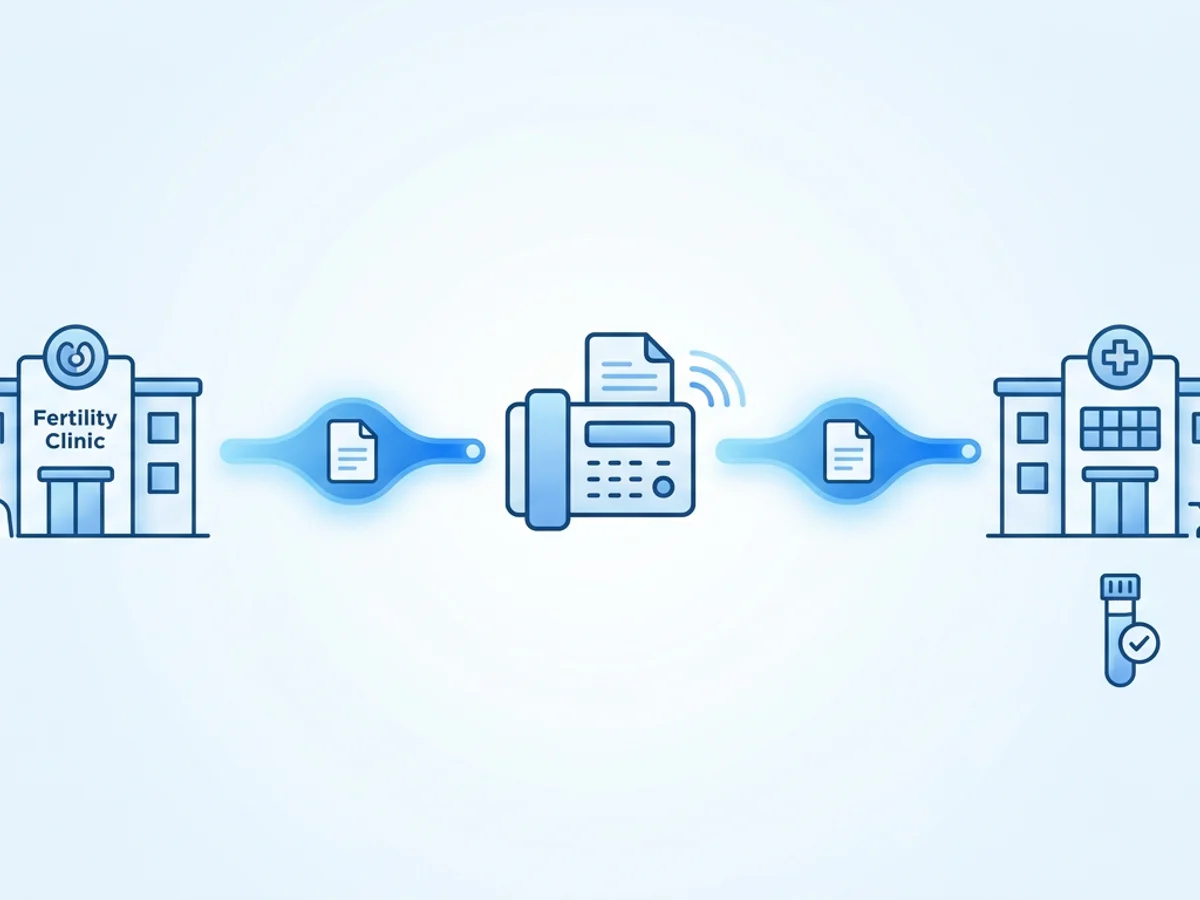
BestFax.com lets users send and receive faxes from a web browser on a phone, tablet, or computer. It works in Safari, Chrome, Firefox, and Edge, with no app download required. For clinics that already have lab orders as PDFs, Word documents, or image files, browser-based faxing can reduce the friction of printing, walking to a fax machine, scanning, and waiting beside the device.
A typical workflow could look like this:
- The nurse finalizes a lab order packet as a PDF.
- The coordinator verifies the reference lab fax number.
- The order, cover page, and any supporting forms are uploaded from a browser.
- The fax is sent, and the confirmation or delivery receipt is saved according to the clinic’s internal process.
This is especially useful for satellite locations or remote coverage. If the clinic’s primary fax machine is busy, down, or inaccessible, staff do not have to wait until they return to the main office to send a time-sensitive order.
It is important to be clear about compliance responsibilities. The service uses TLS encryption for fax transmissions, but it does not offer a BAA or healthcare-specific compliance certification. Fertility clinics should evaluate any faxing method under their own privacy, security, and regulatory requirements before using it for patient information.
Make confirmations part of the cycle timeline
Sending a fax is not the same thing as completing the task. In fertility care, the practical question is: did the reference lab receive the order in time to act on it?
Fax confirmation and delivery receipts matter because they give staff a documented checkpoint. With BestFax.com, users receive fax confirmation/delivery receipts, which can be used to support internal tracking. Still, a confirmation should not replace clinical judgment. For highly time-sensitive orders, such as same-day monitoring labs or pre-retrieval testing, clinics may still decide to call the reference lab after faxing to confirm that the order is in the right queue.
A simple “fax closed-loop” process can prevent a lot of cycle disruption:
Step 1: Assign an owner. Each outbound lab fax should have a responsible staff member, not just a department. For example: “Maria will send and confirm the LabCorp order before 10:30.”
Step 2: Record the destination. Note the fax number used, especially if the lab has multiple departments or locations.
Step 3: Save the confirmation. Keep the delivery receipt wherever your clinic stores fax documentation or patient communications.
Step 4: Escalate exceptions quickly. If the fax fails, the owner should know whether to retry, verify the number, contact the lab, or notify the nurse.
Step 5: Mark the order as sent only after confirmation. Avoid marking an order complete just because it was prepared.
For a concrete example, imagine a patient scheduled for an embryo transfer next week who needs progesterone checked at an outside lab on Friday morning. If the order is faxed Thursday afternoon but fails silently, the patient may arrive at the lab and be turned away or have the wrong test drawn. If the clinic uses a confirmation-based workflow, the failed fax is caught Thursday, not Friday after the patient is already waiting.
Practical habits that reduce failed or delayed lab faxes
Technology helps, but habits make the workflow dependable. Fertility clinics can reduce fax-related delays by tightening a few everyday procedures.
Keep a current reference lab contact sheet
Reference labs may have separate fax numbers for client services, local draw stations, specialty testing, genetics, billing, or provider enrollment. Sending an IVF monitoring order to a general administrative fax number can add hours.
Maintain a shared, dated contact sheet with:
- Lab name
- Department or purpose
- Fax number
- Phone number for urgent follow-up
- Hours and cutoff times
- Notes about required forms or account numbers
Review it regularly, especially when labs merge, change requisition forms, or update department routing.
Use clear cover pages
Professional fax cover pages are included with the service, and they are useful for more than appearances. A concise cover page can tell the receiving lab what the fax contains and how urgent it is.
For example:
“Order for patient blood draw scheduled 7:30 AM tomorrow. Please process estradiol and progesterone per attached requisition. Results requested to ordering clinic fax number on file.”
Avoid putting unnecessary details on the cover page. Keep it direct, accurate, and aligned with your clinic’s privacy policies.
Name files so staff can recognize them
Before uploading a PDF, Word document, or image file, use a file name that helps staff avoid sending the wrong attachment. Internal naming conventions might include patient initials, date, test category, and destination lab. Follow your clinic’s privacy and recordkeeping rules when deciding what identifiers are appropriate in file names.
A consistent naming approach reduces mix-ups during busy monitoring blocks.
Do not wait until the end of the day for urgent cycle labs
Batching can be efficient for routine paperwork, but it is risky for cycle-dependent orders. A better approach is to separate lab faxes into urgency levels:
- Immediate: same-day or next-morning blood draw, trigger-related testing, time-sensitive cycle decisions
- Today: upcoming transfer prep, infectious disease labs needed before retrieval, outside monitoring for the next few days
- Routine: non-urgent records, administrative lab paperwork, future screening
Immediate lab orders should be faxed and confirmed as close to the clinical decision as possible.
Have a backup route before you need it
Fax machines jam. Phone lines fail. Staff get pulled into procedures. A backup faxing option can keep orders moving when the main workflow is interrupted. Browser-based faxing can serve as that backup or as a primary method for clinics that prefer sending directly from digital documents.
Pricing is straightforward: BestFax.com offers a $4.95 one-time per fax option or a $10/month subscription. Clinics that send only occasional backup faxes may prefer paying per fax, while teams that send more regularly may find the monthly option simpler.
A sample no-delay workflow for outside monitoring orders
Outside monitoring is one of the clearest examples of why fax reliability matters in fertility care. Patients may be hundreds of miles from the clinic but still need labs drawn on a specific cycle day.
A smooth workflow might look like this:
- During the patient call, confirm the draw site. Ask where the patient plans to go and verify that the site accepts outside orders.
- Select the correct requisition. Use the reference lab’s current form and include the exact fertility-related labs needed.
- Confirm timing. Note the cycle day, expected draw date, and whether same-day results are needed.
- Prepare the packet. Include the lab order, cover page, insurance or billing information if required, and any supplemental form.
- Send from the browser. Upload the documents, enter the verified fax number, and transmit.
- Check the delivery receipt. If the fax does not go through, act immediately rather than waiting for the patient to discover the problem.
- Tell the patient what to expect. Let them know the order has been sent, and advise them to bring any backup copy your clinic chooses to provide.
- Track expected results. Add a reminder so the care team knows when to look for results and when to call the lab if they have not arrived.
This kind of process is simple, but it protects the cycle. It also gives patients more confidence. Fertility treatment already involves enough uncertainty; arriving at a lab that does not have the order should not be part of the experience.
The bottom line: faxing should support the cycle, not slow it down
Reference lab faxing remains a routine part of fertility clinic operations, especially for outside monitoring, specialty testing, and time-sensitive cycle decisions. The key is to make faxing visible, assigned, and confirmable.
Standardized requisition packets reduce corrections. Verified fax numbers prevent misrouting. Browser-based faxing helps staff send orders from the device they are already using. Delivery receipts give the team a checkpoint before the patient’s cycle is affected.
No fax tool can fix an incomplete order or replace a clinic’s internal compliance review. But a practical, well-managed fax workflow can prevent avoidable delays — the kind that make patients repeat blood draws, wait on medication instructions, or worry that their cycle timing is at risk.
Send your first fax at BestFax.com.
Related Posts
How Vascular Labs Can Fax ABI Reports to Referring Doctors Without Delays
Practical steps for vascular labs to fax ABI reports faster, reduce errors, and document delivery without relying on a single fax machine.
How Crisis Counselors Fax 988 Follow-Up Referrals Without Care Delays
Practical guidance for crisis counselors sending 988 follow-up referrals by fax without slowing handoffs or losing delivery confirmation.
How Prosthetics Clinics Can Fax Detailed Written Orders Without Medicare Delays
Practical fax workflow tips for prosthetics clinics sending Detailed Written Orders while reducing avoidable Medicare documentation delays.