How Dietitians Fax WIC Medical Referral Forms Without Benefit Delays
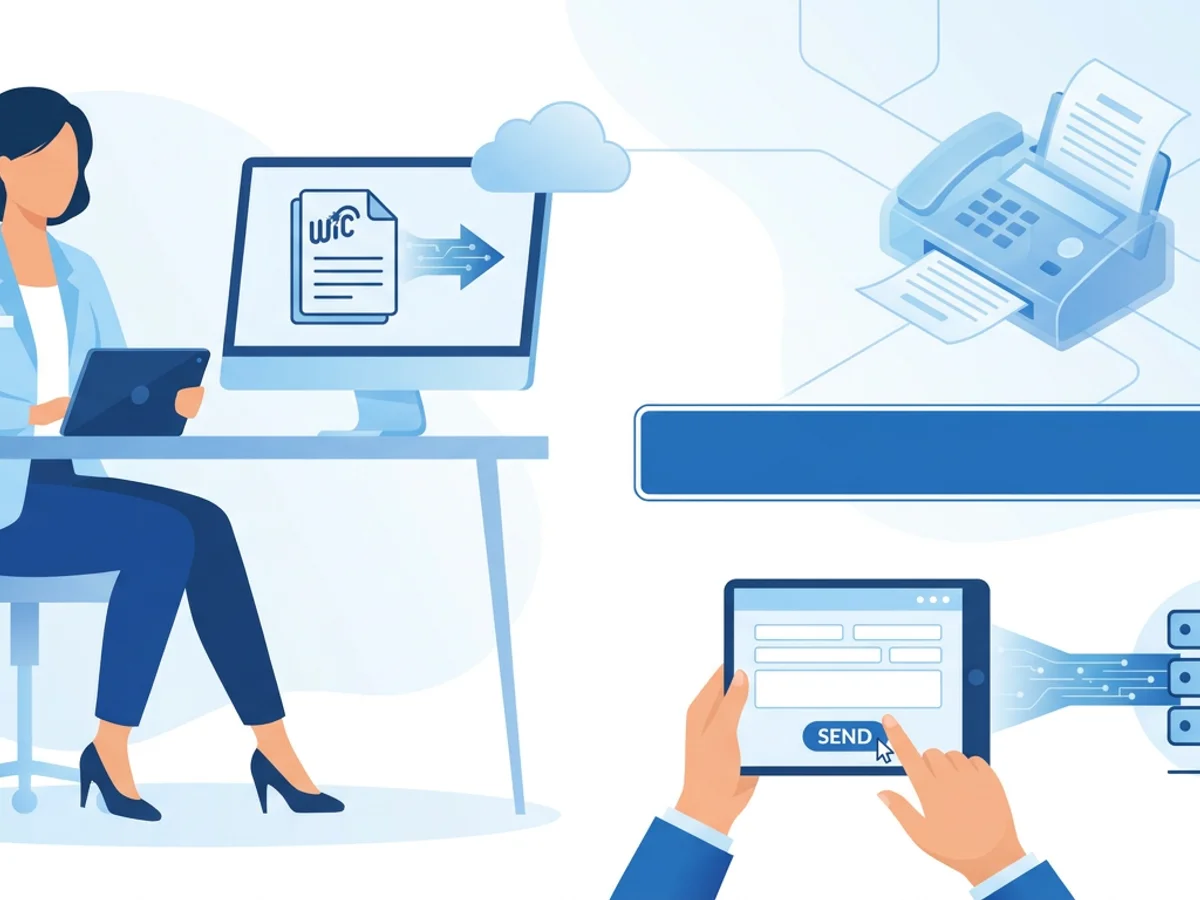
A WIC participant is standing at checkout with an infant formula that requires medical documentation. The clinic has already evaluated the child, the dietitian has the referral form, and the family needs benefits updated before the next feeding schedule becomes stressful. At that point, a delayed fax is not just paperwork friction — it can mean the family leaves without the right formula, foods, or nutrition support.
For dietitians, WIC medical referral forms sit at the intersection of clinical documentation, program rules, and time-sensitive benefits. A missing signature, blurry attachment, wrong fax number, or unconfirmed transmission can delay a benefit change even when the care plan itself is clear.
This guide focuses on the practical side: how dietitians can prepare, fax, and track WIC medical referral forms in a way that reduces avoidable delays. It is written for real clinic workflows — shared offices, hybrid workdays, provider signatures, last-minute formula changes, and families who cannot wait days for a resend.
Why WIC Medical Referral Faxes Get Delayed
Most WIC fax delays are not caused by one major failure. They usually come from small gaps in the handoff between the dietitian, medical provider, WIC office, and participant.
Common delay points include:
- The form is incomplete or missing a required diagnosis, duration, or qualifying condition.
- The prescriber’s signature is missing, illegible, expired, or not dated.
- The WIC agency receives the form but cannot match it to the participant.
- The fax goes to a general office number instead of the correct WIC clinic or nutrition unit.
- A scan is too dark, cut off at the edges, or sent sideways.
- The sender assumes the fax went through but never checks the confirmation.
- A cover page is missing callback information for quick corrections.
Consider a common example: a pediatric dietitian completes a form for a child who needs a specific therapeutic formula. The diagnosis and formula name are correct, but the number of refills or authorization length is left blank. The WIC office receives the fax but cannot issue the requested benefit until clarification arrives. If no direct phone number appears on the fax cover page, the WIC staff may call the main clinic line, leave a message, or wait for the family to follow up.
The goal is not just to send the fax. The goal is to send a document that the WIC office can act on immediately.
Build a Pre-Fax Check That Matches WIC Reality
Before sending a WIC medical referral form, dietitians should use a short checklist that reflects what WIC staff actually need to process benefits. Requirements vary by state and local agency, so the form itself and local WIC guidance should always be the source of truth. Still, the following review catches many avoidable problems.
Start with participant identifiers. The form should include the participant’s full legal name, date of birth, parent or guardian name when applicable, and any WIC ID or clinic number if known. If a child has a different last name from the guardian, make that easy to understand. WIC offices handle high volumes of forms, and clear identifiers help staff match the fax to the right record quickly.
Next, review the medical necessity section. For formula or food package changes, the WIC office may need a qualifying medical condition, allowed product name, quantity, duration, and any restrictions. Avoid vague phrasing when the form asks for specifics. For example, “special formula needed” is less useful than listing the exact formula and the medically required duration, if the form allows that detail.
Then confirm the authorization requirements. Many forms require a healthcare provider’s signature and date, and some specify which credentials are acceptable. Dietitians should make sure the correct clinician has signed in the right place before faxing. A beautifully scanned form with a missing signature is still a delay.
Finally, check the practical details:
- Is every page included?
- Is the form current, not an outdated version saved on an old desktop?
- Is the fax number verified against the local WIC office’s current instructions?
- Are attachments readable if converted from a photo or scan?
- Is there a callback number for the dietitian, clinic, or direct team line?
A good habit is to pause before sending and ask: “If I worked at the WIC office and received this with no context, could I process it today?” If the answer is no, add the missing context before faxing.
How Browser-Based Faxing Fits Dietitian Workflows
Dietitians do not always send WIC paperwork from a dedicated fax machine next to their desk. Some work across multiple clinic rooms. Some cover more than one site. Others review referrals from home or from a hospital workstation where the department fax line is busy.
BestFax.com lets users send and receive faxes from a web browser on a phone, tablet, or computer. It works in Safari, Chrome, Firefox, and Edge, with no app download required. For a dietitian who already has the WIC form saved as a PDF, Word document, or image file, browser-based faxing can be a practical way to transmit the form without hunting for a physical fax machine.
Here is what that can look like in a real workflow:
A dietitian receives a signed WIC referral form as a PDF from the pediatric clinic. Before lunch, they open the fax service in a browser, upload the PDF, add a professional cover page, enter the WIC office fax number, and send. Afterward, they save the fax confirmation or delivery receipt in the appropriate internal record according to the organization’s documentation policy.
Another example: a provider signs a form during an outpatient visit, and the clinic team scans it as an image file. Instead of waiting for access to the office fax machine, the dietitian can upload the image from a browser, provided the scan is clear and complete. If the image is too faint or cropped, it should be rescanned before sending.
This approach does not replace clinical review, state WIC requirements, or the dietitian’s responsibility to handle participant information appropriately. It simply gives teams a way to send fax-based documentation from common devices when fax is the required channel.
One important compliance note: BestFax.com uses TLS encryption for fax transmissions, but it does not offer a BAA or healthcare-specific compliance certification. Dietitians and clinics should follow their organization’s privacy, security, and vendor approval policies before using any fax tool for medical documents.
A Practical Faxing Workflow to Avoid Benefit Interruptions
The best time to prevent a WIC benefit delay is before the first fax is sent. A consistent workflow can save hours of phone calls later.
1. Confirm the correct destination before sending
Do not rely on an old fax number copied from last year’s form unless it has been verified. WIC offices may have different numbers for clinics, nutrition services, formula authorization, or central processing. If the participant recently moved counties or changed WIC sites, confirm where the form should go.
A quick verification step matters most when benefits are urgent. Sending to the wrong office can create a silent delay: the fax may transmit successfully, but the receiving office may not be the one responsible for issuing benefits.
2. Use a cover page that makes follow-up easy
Professional fax cover pages are included with the service, and they are useful for more than appearance. A good cover page should help the WIC staff route the form and resolve questions quickly.
Include concise details such as:
- Recipient department or WIC clinic, if known
- Participant name and date of birth
- Number of pages, including the cover page
- Sender name, role, clinic, and callback number
- A brief subject line, such as “WIC Medical Referral Form for Formula Authorization”
Avoid putting unnecessary clinical detail on the cover page. The purpose is routing and contact information, not a second medical record.
3. Send readable files, not just available files
Browser-based faxing supports PDF, Word, and image file uploads, but the quality of the source file still matters. Before sending, open the file and look at it the way the recipient will see it.
Check that:
- The entire form is visible from edge to edge.
- The signature and date are readable.
- Product names, quantities, and duration fields are not blurred.
- Multiple pages are in the correct order.
- Photos are not shadowed, skewed, or cut off.
If a WIC office has to call because it cannot read the formula name or authorization period, benefits can stall even though the fax technically arrived.
4. Save the confirmation and know what it proves
Fax confirmation and delivery receipts are provided, and dietitians should treat them as part of the workflow. A confirmation can help establish that the fax transmission completed, when it was sent, and what number it was sent to.
However, confirmation does not always mean the WIC office has reviewed or approved the form. It means the transmission was completed. For urgent benefit changes, especially those involving infant formula, a follow-up call may still be appropriate based on local practice.
A useful internal note might read: “WIC medical referral faxed to [number] on [date/time]; confirmation received; follow-up call placed to WIC office due to urgent formula need.” That kind of documentation helps the next staff member understand what has already happened.
5. Create a same-day correction path
Even careful teams occasionally send a form that needs clarification. The key is to make corrections same-day whenever possible.
If the WIC office calls back with a question, the dietitian should be able to find the original file, update or obtain corrected documentation, and resend it without restarting the entire process. Store the working form in the appropriate approved location, not in a random downloads folder where another team member cannot find it.
For recurring WIC work, clinics can also maintain a simple internal note with current WIC fax numbers, common form links, and local processing preferences. That reference should be reviewed periodically so staff do not keep using outdated instructions.
Small Details That Make a Big Difference for Families
WIC paperwork can feel routine inside a clinic, but for participants it often affects what they can take home from the store or obtain from a vendor. Dietitians are in a strong position to reduce friction because they understand both the nutrition need and the documentation behind it.
A few habits consistently help:
Use plain, specific language when the form allows explanation. If a child requires a particular formula, list it exactly as needed. If substitutions are not appropriate, follow the form’s instructions for noting that. If the authorization is temporary pending reassessment, make the duration clear.
Coordinate with the family about timing. Let them know when the form was sent, whether they should contact WIC, and whether the clinic plans to follow up. Avoid promising that benefits are updated immediately after faxing unless the WIC office has confirmed it.
Keep a resend-ready copy. If the WIC office says the fax was not received or was unreadable, the fastest response is to resend the same day with a clearer scan or corrected information. Having the final signed document ready prevents a minor transmission issue from becoming a multi-day delay.
Know when to pick up the phone. Fax is often the required documentation channel, but urgent nutrition situations may call for direct coordination. A quick call to the WIC office after sending can clarify whether the form arrived, whether anything is missing, and whether the participant needs to take additional steps.
Be honest about tool limitations. Online faxing can make sending and receiving faxes more convenient, especially across devices, but it does not guarantee WIC approval, replace required signatures, or solve incomplete documentation. Benefit timing still depends on local WIC processing, program rules, and the completeness of the referral.
BestFax.com offers two straightforward pricing options: $4.95 for a one-time fax or a $10/month subscription. For dietitians or clinics that fax WIC forms only occasionally, the one-time option may be enough. For teams that regularly send medical referral forms, a subscription may be more practical.
The real measure of success is not how quickly a fax leaves your browser. It is whether the WIC office receives a complete, readable, properly routed form that can be processed without chasing missing details. When dietitians combine careful form review with reliable fax confirmation and timely follow-up, families are less likely to experience preventable benefit delays.
Send your first fax at BestFax.com.

Related Posts

How ER Clinics Fax EMTALA Transfer Forms Without Acceptance Delays
Practical steps for ER teams to fax EMTALA transfer packets faster, verify delivery, and reduce avoidable acceptance delays.

How Chiropractors Can Fax PIP Treatment Notes Without Claim Rejections
Practical steps for chiropractors to prepare, fax, and document PIP treatment notes so claims are less likely to be delayed or rejected.

How Dermatology Clinics Can Fax Biopsy Results Without Slowing Referrals
Practical ways dermatology clinics can fax biopsy results faster, reduce referral handoff delays, and document delivery receipts.