How Bail Bondsmen Fax Defendant Release Forms to County Jails Fast
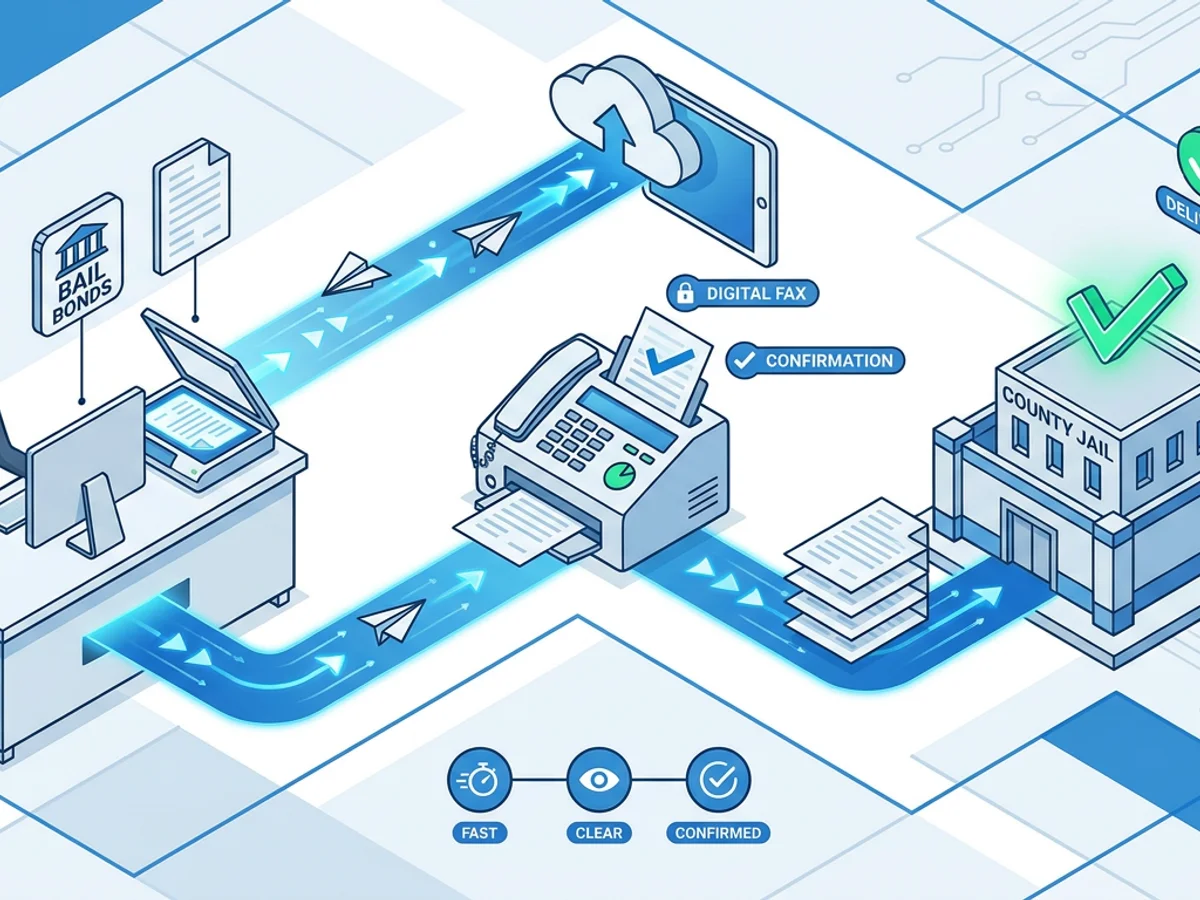
A defendant has posted bond, the family is calling every ten minutes, and the county jail says they cannot start processing release until the correct paperwork is received. For a bail bondsman, that moment is all about speed, accuracy, and proof.
Many county jails still rely on fax for release-related documents because fax fits their existing intake process: forms arrive at a known number, staff can match them to a booking file, and the sender can produce a transmission confirmation. That does not make the process stress-free. A mistyped fax number, unreadable bond form, missing cover sheet, or delayed confirmation can slow down a release and frustrate everyone involved.
Browser-based faxing can help bondsmen send defendant release forms quickly from the office, courthouse hallway, parking lot, or home computer. The key is having the documents ready, knowing what the jail expects, and using a process that reduces avoidable errors.
Why County Jails Still Depend on Fax for Release Paperwork
Jails operate around documentation. Before staff can move a defendant through release processing, they typically need clear paperwork that connects the bond, defendant, case, and bonding agency. Requirements vary by county, but release packets may include items such as:
- Bond forms or bail bond powers
- Defendant name and booking number
- Case number, charge, or court reference
- Surety or bonding company information
- Bail bondsman contact details and license information
- Court or jail-specific release authorization forms
- Any required signatures, seals, or attachments
Fax remains common because it creates a point-to-point delivery workflow that many jail records desks already trust. A faxed document arrives in a controlled queue. It can be printed, stamped, routed, and stored with the inmate’s file. In many counties, the jail may accept faxed bond documents faster than mailed originals or email attachments that have to pass through filters, staff inboxes, or separate review steps.
That said, fax is not magic. If the document is blurry, incomplete, sent to the wrong department, or missing a required identifier, the jail may not process it until someone follows up. The fastest fax is the one that arrives complete, legible, and easy for jail staff to match to the correct defendant.
A good release fax does three things:
- Identifies the defendant immediately. Staff should not have to hunt for the booking record.
- Includes every required page. Missing pages often mean a second fax and more waiting.
- Creates proof of delivery. A confirmation receipt helps the bondsman document when the paperwork was transmitted.
The Fast Release Fax Workflow: From Signed Form to Jail Desk
A practical workflow matters more than any single tool. When a defendant’s family is waiting outside the jail, the bondsman needs a repeatable process that works under pressure.
Start by confirming the jail’s current fax number. Do not rely on an old saved contact unless it has been verified recently. Large county jails may have different numbers for booking, records, court liaison, warrants, or release processing. Sending to the main administrative fax can add avoidable delay if the packet has to be forwarded internally.
Next, organize the packet before sending. Put the most important identifying information up front. A professional fax cover page is useful here because it gives jail staff a quick summary before they review the attached bond forms. Include the defendant’s full legal name, date of birth if appropriate under local practice, booking number if available, case number, and the number of pages being transmitted. Also include your callback number so staff can reach you quickly if something is unclear.
Then check the file quality. Many bondsmen are working with PDFs, Word documents, scans, and phone images. Browser-based faxing through BestFax.com supports PDF, Word, and image file uploads, which is helpful when documents come from different sources. But the sender is still responsible for legibility. Before transmitting, open the file and zoom in. Make sure signatures are visible, names are not cut off, and court seals or notary information can be read.
A typical fast-send scenario might look like this:
A bondsman finishes paperwork at 9:40 p.m. after the jail’s public counter has slowed down for the night. The defendant’s family is asking how long release will take. Instead of driving back to the office fax machine, the bondsman uploads the signed PDF from a laptop or phone browser, adds a cover page, enters the jail release fax number, and sends it. When the confirmation receipt arrives, the bondsman calls the jail desk and says, “I faxed a five-page bond packet for Marcus Hill, booking number 48291, at 9:47 p.m. I have a confirmation if needed.”
That follow-up call is often what turns a sent fax into a processed fax. Jail staff may be handling many requests at once. A concise call with the defendant’s identifiers and transmission time helps them locate the paperwork in the fax queue.
What Bail Bondsmen Should Include on the Fax Cover Page
The fax cover page is not just a formality. For release paperwork, it is a routing tool. A clean cover page can prevent the packet from sitting in the wrong pile or being matched to the wrong person.
BestFax.com includes professional fax cover pages, and bondsmen should use them to make the jail’s job easier. Keep the message short, direct, and specific. Avoid clutter, marketing language, or unnecessary personal details.
A useful cover page might include:
To: County Jail Release Desk or Booking Department
Fax: Confirmed jail fax number
From: Bondsman name, agency, license number if applicable
Phone: Direct callback number
Re: Bond paperwork for defendant release
Defendant: Full legal name
Booking number: If available
Case number: If available
Pages: Total number including cover page
Message: “Please process attached bond documents for release review. Call if any page is unclear or additional information is needed.”
Page count matters. If your cover page says seven pages but the jail receives five, staff can identify the issue right away. Without a page count, the packet may be treated as complete even when an attachment failed or was omitted.
Be careful with sensitive information. Bail and jail documents may contain personal data, criminal case details, or financial information. BestFax.com uses TLS encryption for fax transmissions, but the service does not offer a BAA or formal healthcare compliance certification. If you handle documents that trigger specific privacy, healthcare, or agency compliance obligations, confirm your requirements before choosing any fax method. For ordinary bond release paperwork, many offices still use fax as part of their standard process, but compliance responsibilities remain with the sender and agency.
Speed Tips That Reduce Release Delays
Fast faxing is partly about transmission time, but most delays happen before or after the fax is sent. The following habits can save time when every minute matters.
Save verified jail fax numbers by county. Maintain an internal list with the release desk number, booking number, records number, and after-hours instructions. Add notes such as “call after faxing” or “include booking number on cover page.” Review the list regularly because county departments do change numbers.
Use consistent file names. A file named Garcia_Bond_Packet_Booking_77104.pdf is easier to find under pressure than scan_0047.pdf. If you need to resend or reference the document later, clear naming helps.
Flatten or export forms to PDF when possible. Word files and images can work, but PDFs are often more predictable for official paperwork. If a form has fillable fields, make sure the saved version actually shows the completed information.
Do not send photos without checking them first. Phone images can be acceptable if they are sharp, evenly lit, and uncropped. A shadow across a signature line or a cut-off case number can cause a rejection or callback.
Send only what the jail needs. Extra pages can slow review and create confusion. If the release desk asks for a specific bond form and power of attorney, do not bury them behind unrelated client intake documents.
Follow up with the right words. Instead of asking, “Did you get my fax?” provide the details: defendant name, booking number, number of pages, and approximate send time. That helps staff locate the transmission quickly.
Keep the delivery receipt. Fax confirmation and delivery receipts are important for recordkeeping. They can show that the packet was transmitted to the number entered and provide a time reference if there is a dispute about when documents were sent.
Using browser-based faxing also helps when a bondsman is away from the office. The service works from a web browser on a phone, tablet, or computer in Safari, Chrome, Firefox, or Edge. No app download required. That can matter when paperwork is signed at a courthouse, a client’s kitchen table, or outside the jail after normal office hours.
Common Mistakes That Slow Down Jail Fax Processing
Even experienced bondsmen can run into fax issues when a release is urgent. A few mistakes are especially common.
One is sending the packet to a general county fax number instead of the jail release desk. County websites can be confusing, and search results may show administrative numbers that are not monitored for release paperwork. When in doubt, call the jail and ask which number is currently used for bond documents.
Another is assuming the fax confirmation means the release is underway. A confirmation receipt shows transmission status, not that jail staff approved the paperwork or began release processing. The jail may still need to review the documents, verify bond conditions, check warrants or holds, and complete internal procedures. A receipt is proof that the fax went through; it is not a promise of immediate release.
Illegible attachments are another major problem. If a form was scanned at an angle or a photo was taken in poor lighting, the jail may not be able to verify signatures, bond amounts, or identifying information. Before sending, look at the file the way a busy jail clerk will see it. If you have to squint, rescan it.
Missing signatures also cause delays. It is easy to upload the unsigned draft instead of the final signed version, especially when multiple copies are saved on the same device. Open the document immediately before faxing and verify signatures, initials, dates, and required notary or agency fields.
Finally, some bondsmen forget to keep the receipt with the defendant’s file. If a family member, attorney, court, or agency later asks when the paperwork was submitted, the delivery receipt is much more reliable than memory. Best practice is to save the receipt alongside the release packet and note any follow-up calls, including the staff member’s name if provided.
Using Online Fax Honestly: What It Can and Cannot Do
Online faxing is useful because it removes dependence on a physical fax machine. You can send from a browser, upload common document types, add a cover page, and keep a delivery receipt. For bail bond work, that can make after-hours and mobile situations easier.
But it is important to be realistic. Online faxing cannot make a jail process paperwork faster than its own procedures allow. It cannot correct an invalid bond form, bypass a hold, or guarantee release at a certain time. It also cannot replace the bondsman’s responsibility to confirm local requirements and use the correct destination number.
Pricing is straightforward: BestFax.com offers a $4.95 one-time per fax option or a $10/month subscription. There is no free trial. For a bondsman who only occasionally needs to fax from the field, paying per fax may be enough. For an agency sending frequent bond packets, a monthly subscription may be simpler.
The strongest use case is not “fax and forget.” It is “fax accurately, confirm delivery, and follow up intelligently.” That is the rhythm that helps reduce avoidable delays in defendant release processing.
When release paperwork is urgent, the basics win: verify the fax number, prepare a clean packet, use a clear cover page, send from a reliable browser-based tool, save the receipt, and call the jail with the exact details they need.
Send your first fax at BestFax.com.
Related Posts

How Funeral Homes Fax Death Certificates to Doctors Without Burial Delays
Practical tips for funeral homes faxing death certificate paperwork to doctors quickly, clearly, and with fewer burial or cremation delays.

How Mobile Phlebotomists Fax Lab Requisitions Without Specimen Delays
Practical field tips for mobile phlebotomists to fax lab requisitions clearly, confirm delivery, and avoid paperwork-related specimen delays.
How Title Companies Fax Payoff Statements Without Closing Delays
Payoff statements can stall closings when faxing is slow or disorganized. Learn practical steps title companies can use to send, confirm, and track payoff faxes.